“planting environment” search results (3000)

Variety introduction of Robusta Coffee Price planting Environment Flavor description treatment method
Arabica coffee accounts for 75% of the world's coffee production, and its quality varies widely, from good to bad. In recent years, a few countries (such as India) have devoted themselves to improving the quality of robusta coffee. They have planted robusta in high altitude areas, given the most careful care, and carefully washed the coffee. As a result, they get very good quality robusta coffee beans! The top Luo.
2016-10-15 Robes Booth Coffee Price planting Environment Flavor description treatment Variety
The requirements of coffee on the ecological environment in which grain coffee requires a slightly higher temperature.
Small seed coffee is native to the lower part of the Ethiopian rainforest in northern Africa. The temperature is relatively low, with an average annual temperature of 20 degrees. The origin of medium-grain coffee is near the equator. Therefore, small seed coffee has stronger cold tolerance and wider adaptability than medium grain coffee. Medium-grain coffee requires a slightly higher temperature. First, the requirement for temperature should be based on the natural conditions of Yunnan, and the suitable planting area of coffee should be selected.
2015-10-07 Coffee ecological environment requirements medium seed temperature high environment
Basic knowledge of fine coffee the growth environment of small-grain coffee
Small grain coffee scientific name: Coffea arabica family genus: Rubiaceae coffee genus morphological characteristics: small trees or large shrubs, plant height 5 meters 8 meters. Base usually much branched, old branches gray-white. Nodes inflated, young branches glabrous. Leaves thinly leathery-ovate-lanceolate or lanceolate, apex long acuminate, base cuneate or slightly obtuse, entire or shallowly wavy, both surfaces glabrous. Cymes several clustered in leaf axils
2014-10-29 Coffee knowledge boutique coffee basic knowledge small grain coffee growing environment
Ethiopian Coffee Manor Flavor description Price planting Environment Brand taste introduction
In December 1994, the Constitution of the Federal Democratic Republic of Ethiopia was formulated. According to the Constitution, Ethiopia will implement a federal system and a parliamentary cabinet system after the general election for a term of five years. After the national election in May 1995, the Federal Democratic Republic of Ethiopia was established on August 22, and Meles became prime minister in her capacity as chairman of the majority party of the people's House of Representatives. On May 14, 2000, Ethiopia held a national meeting
2016-10-15 Ethiopia coffee manor flavor description price planting environment brand
Introduction of Coffee Manor Coffee planting Environment of Heavenly Gift Manor
La Minita Farm (La Minita) most of Costa Rica's farms use water washing to produce bright, lively and sour coffee beans, and the neatness of the farm and the good security of the area make it known as Switzerland in the country's coffee country. La Minita Farm is located in a place called Tarrazu south of the capital San Jose; marks the Tarra
2016-07-11 Coffee Manor introduction Godsend planting Environment Lamy Nita Farm Min
Introduction to the characteristics of producing areas in the description of planting environment and flavor of coffee in Bolivia
Bolivia is 1/3 of the Andean mountains, rugged terrain, mainly road transport, accounting for more than 85% of transportation. The main railway and road networks are concentrated in the west, and remote areas rely on air communication. But road coverage is the lowest in South America. And there is also the Ronggas Highway, the world's first insurance road known as the road to death. There is no developed economy here. It is the poorest in South America.
2016-09-19 Bolivia Coffee Distribution situation planting Environment Flavor description producing area Special
Introduction to the planting environment of Indonesia Mantenin boutique coffee with a long aftertaste
Mandarin Coffee is produced in Sumatra, Indonesia, Asia, also known as Sumatran Coffee. The main producing areas are Java, Sulawesi and Sumatra, 90% of which are Robusta species. Among them, the "Mantelin" produced in Sumatra is the most famous. The best of the exquisite traditional Arabica coffee produced in northern Sumatra of Sumatra is called Lindong Li
2016-08-17 Aftertaste long Nieman Tenin boutique coffee flavor taste planting environment
Introduction to the planting Environment of Tieka Variety Coffee
Bourbon coffee is a variety of small-grain coffee second only to Tibica. At first, the main branch and the trunk grew upward at 45 degrees, and drooped with fruit load, the lateral branches were denser, the fruit was more, and the yield was higher. But the berries are smaller and ripen more slowly. The top bud and tender leaves of Bobang are green, called green-top coffee. It was not until 1715 that France transplanted Yemeni mocha round beans to the island of Bourbon on the east coast of Africa.
2016-10-17 Pickup variety coffee planting technology characteristics environment introduction
Growing Environment and characteristics of Coffee trees with knowledge of Coffee planting
Coffee gives the public the impression that it is black, bitter and excited after drinking sleepless beverages. The coffee beans we see in the coffee shop are brown, roasted beans and amber. Coffee comes from coffee beans, which are harvested and processed from the fruits of coffee trees. Coffee trees grow at the center of the equator, south.
2014-11-26 Coffee knowledge coffee planting coffee trees
Introduction to the altitude of planting Environment in Yunnan Tieka Coffee planting Manor
Bourbon: this variety is derived from the iron pickup and was expanded by the French in 1708 on the island of Bourbon (now known as Reunion). Bobang also has a beautiful aroma and rich taste, higher yield and growth than iron pickup, suitable for planting in an area of 12002000 meters, but less resistant to diseases and pests, and more sensitive to strong winds and heavy precipitation. Wave
2016-07-15 Yunnan pickup coffee planting manor environment altitude introduction
Panamanian coffee growing environment Panamanian coffee flavor
The microclimate of the Panamanian highlands is the most important resource that makes Panamanian coffee unique. The most important resource that makes Panamanian coffee unique is its microclimate. The east-west environment of the Republic of Panama allows cold air to flow through the Central Mountains and converge above 6500 feet, creating a variety of microclimates in the Boquete and Volcn Candela regions.
2016-05-26 Panama coffee planting environment flavor highlands have microclimate
The planting technology of coffee tree introduces the environment in which coffee tree is suitable to grow.
Field management of loosening soil and weeding: when the seedling height is 3cm to 6cm, the weak or overdense seedlings are pulled out; when the seedling height is 10cm and 13cm, the plant distance is about 30cm. Soil loosening and weeding were carried out at the same time between seedlings and fixed seedlings to keep the soil loose. Coffee beans are more drought-tolerant, and the soil can grow normally when the soil moisture is maintained. During the drought, the coffee beans should be properly watered, but there should be less squatting seedlings during the seedling fixing period.
2016-06-16 Coffee planting technology introduction fit in what environment growth field management
The annual output of coffee in Indonesia introduces the planting environment of coffee beans and the introduction of Kahayang Ganzhuang.
When Indonesian consumers know more about quality coffee, there is an increase in the number of special coffee shops, according to coffee owners: in big cities like Jakarta, Surabaya, Bandung and Bali, special coffee shops are growing rapidly, which also shows that consumers know more about coffee, and coffee shopkeepers must choose high-quality coffee ingredients.
2016-07-05 Indonesia coffee annual output introduction coffee beans planting environment Kaha Yang
Bolivia Coffee How to taste Growing environment Producing area Price Flavor Description Introduction
Arabica coffee cannot be grown at altitudes higher than 2000 meters, and if the altitude is too high, the coffee trees will freeze due to the low temperature. Bolivian coffee is mainly grown in the Yungas region northeast of La Paz. Bordering the Amazon River basin, it is about 1500-2500 meters above sea level and has an average annual temperature of about 10-15 ° C. Therefore, coffee growth is guaranteed.
2016-09-19 Bolivia coffee taste how grow environment region price flavor
Introduction to the planting Environment and Flavor of Indonesian Coffee
The chairman of the Indonesian Special Coffee Association (SCAI), one of the high-quality coffee institutions in Indonesia, gave a brief overview of the export coffee business. Indonesia's total exports grew by an average of 50-20% a year from 2000 to 2009, until it became the third largest coffee manufacturer in the world. Robasta coffee accounted for about 70% of the total exports, because the earliest
2016-06-12 Indonesia coffee planting environment flavor introduction development
Introduction to the planting environment of coffee trees Coffee trees bear fruit several times a year
The first flowering period of the coffee tree is about three years old. the five-petal tube-shaped white flowers are filled with a faint scent of jasmine and the inflorescences are arranged in dense clusters. Flowers wither after two or three days of blooming and begin to bear fruit after a few months. The fruit is a drupe with a diameter of about 1.5 cm. It is green at first, then turns yellow gradually, turns red when ripe, and is very similar to cherries.
2016-07-06 Coffee planting environment introduction one year several times coffee first time flowering period about
The growing environment of Colombian coffee beans
The suitable climate in Colombia provides a real natural pasture for coffee. Coffee trees in Colombia are mainly cultivated in the Andes, on steep slopes about 1300 meters above sea level, where the annual temperature is about 18 degrees Celsius, annual rainfall is 2000 to 3000 millimeters, latitude 1-11 15 north, longitude 72-78 west, and the specific range of elevation can exceed 2.000 meters. By
2016-06-02 Colombia coffee beans planting environment suitable climate coffee ti
The requirements of Coffee on Ecological Environment
Small seed coffee is native to the lower part of the Ethiopian rainforest in northern Africa. The temperature is relatively low, with an average annual temperature of 20 degrees. The origin of medium-grain coffee is near the equator. Therefore, small seed coffee has stronger cold tolerance and wider adaptability than medium grain coffee. Medium-grain coffee requires a slightly higher temperature. First, the requirement for temperature should be based on the natural conditions of Yunnan, and the suitable planting area of coffee should be selected.
2014-07-09 Coffee environment coffee beans coffee trees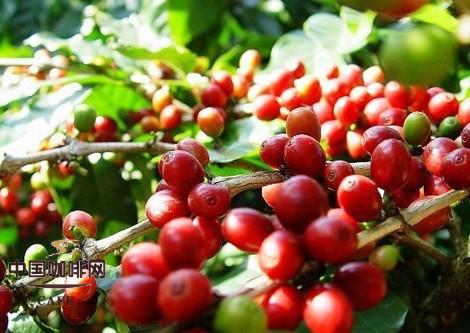
Ethiopian boutique coffee Ethiopian geographical environment Ethiopian coffee harvest fruity flavor in a year
Ethiopia's geographical environment is very suitable for coffee growth. Coffee is mainly grown in the southern highlands between 1100 and 2300 meters above sea level. The main coffee producing areas are Harar, Limu, Djimma, Sidamo, Kaffa, Yergacheffe and Wellega. The soil drainage in these areas is good.
2016-07-12 Ethel Searle Biya boutique coffee Ethiopia geography one year harvest
Bolivian coffee producer Yongas, northeast of La Paz, has a unique coffee growing environment.
We know that Arabica coffee cannot be grown in cold places above 2000 meters above sea level. if the altitude is too high, coffee trees will frost because the temperature is too low. So Bolivian coffee is mainly grown in the Yungas region northeast of La Paz. It borders the Amazon basin and is about 1500-2500 meters above sea level with an average annual temperature of about 10-15 ℃. Therefore, guarantee
2016-06-18 Owned thick coffee planting environment Bolivia producing country La Paz northeast